

Humanitext at DH2026: Three Presentations in Daejeon, South Korea
8/3/2026
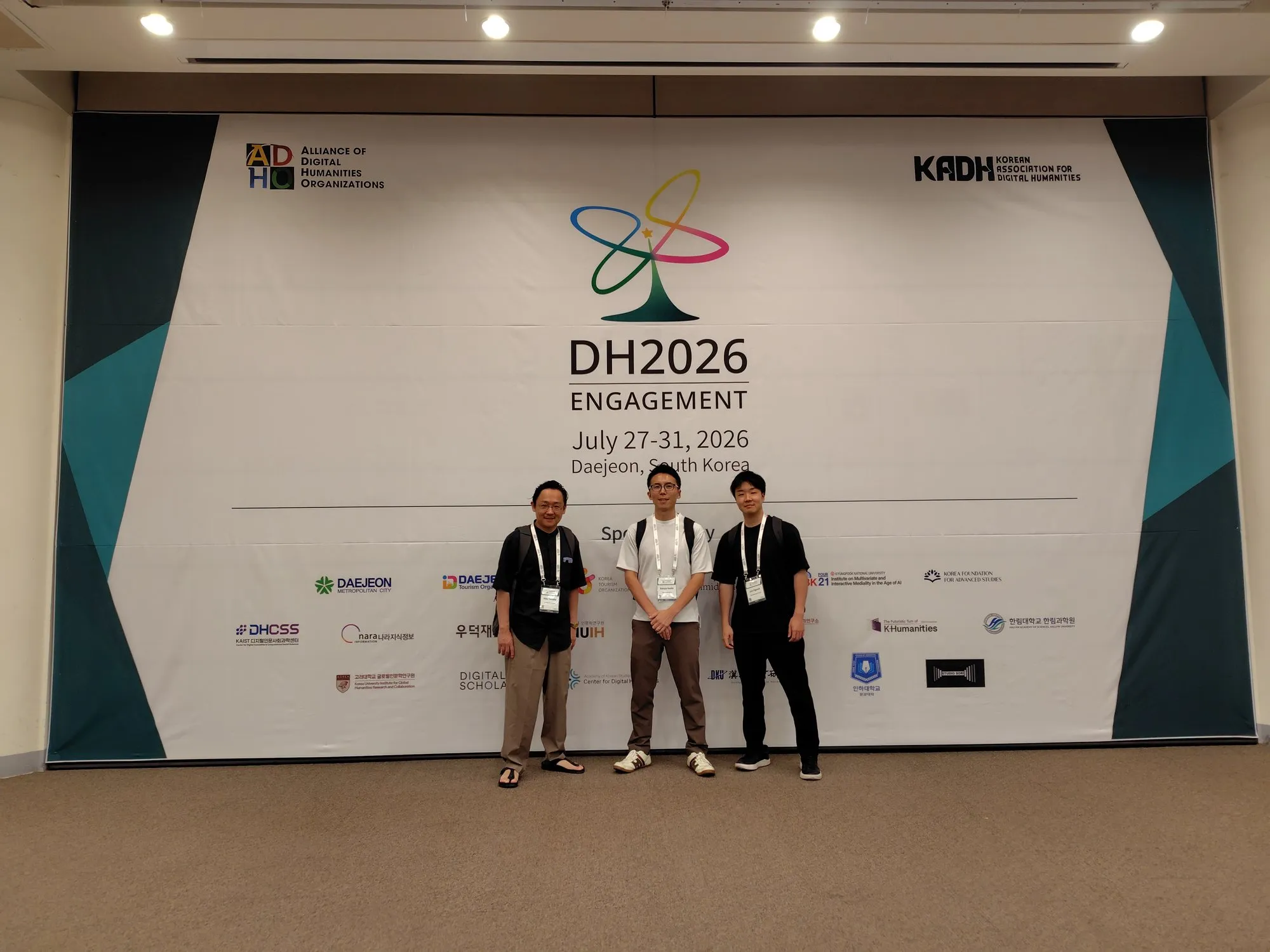
From July 27 to 31, 2026, DH2026 — the annual international conference of the Alliance of Digital Humanities Organizations, hosted this year by the Korean Association for Digital Humanities — was held at the Daejeon Convention Center in South Korea. Under the theme “Engagement,” the conference featured 421 presentations and 94 posters across 111 sessions, with real-time AI translation provided in 89 of them.
The Humanitext project contributed three presentations:
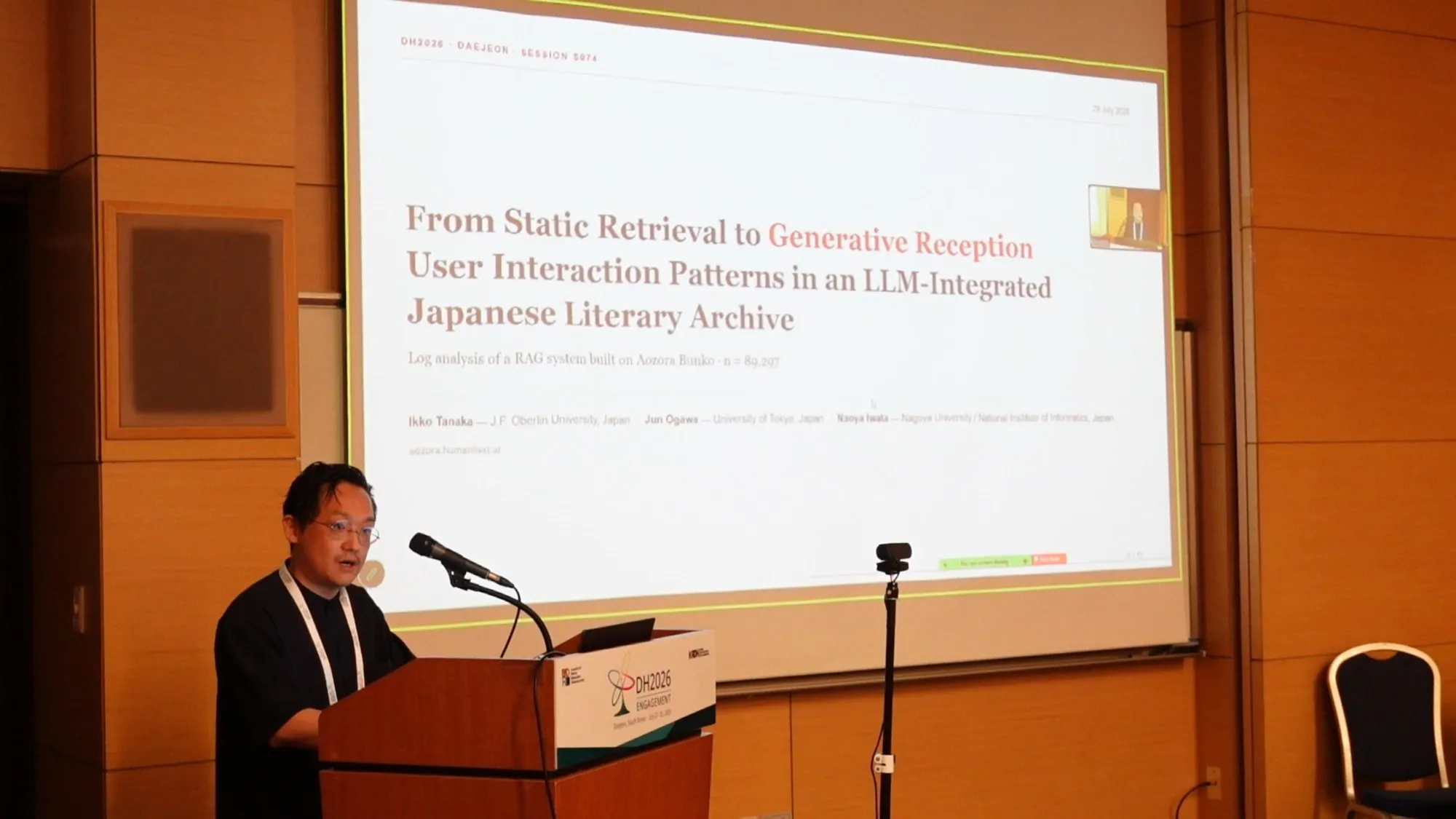
From Static Retrieval to Generative Reception: User Interaction Patterns in an LLM-Integrated Japanese Literary Archive (short paper; Ikko Tanaka, Jun Ogawa, Naoya Iwata — July 29) analysed real query logs from Humanitext Aozora to examine how integrating an LLM changes the ways in which users engage with a literary archive.
From Tree to Vector: A CTS-Compliant Chunking Strategy for Preserving Citation Integrity in RAG Systems (short paper; Naoya Iwata, Ikko Tanaka, Jun Ogawa — July 31) presented the data architecture underlying Humanitext Antiqua: a chunking algorithm aligned with the Canonical Text Services citation scheme that bridges the tree structure of TEI/XML and the vector retrieval used in RAG while preserving citation integrity.
Visualizing Classical Narratives via RAG-Enhanced AI and Iterative Video Synthesis (poster; Naoya Iwata, Chieka Saito, Yuki Suzuki, Ikko Tanaka, Jun Ogawa) introduced a framework combining RAG-based source verification with generative video synthesis. Developed through the video poem ANIMA ANTIQUA, this was joint work with two student members at Nagoya University.
With the conference hosted in Asia this year, the meeting was also a valuable opportunity to exchange ideas in person with researchers working on East Asian classical texts in Korea, Japan, and China. Iwata’s talk, the Q&A, and the poster session are covered in more detail in the accompanying essay, “DH2026: AI Translation and the Work of Building Research Infrastructure.”