

Lecture at SNU: Humanitext - Shaping the Future of Humanities with AI
3/16/2026
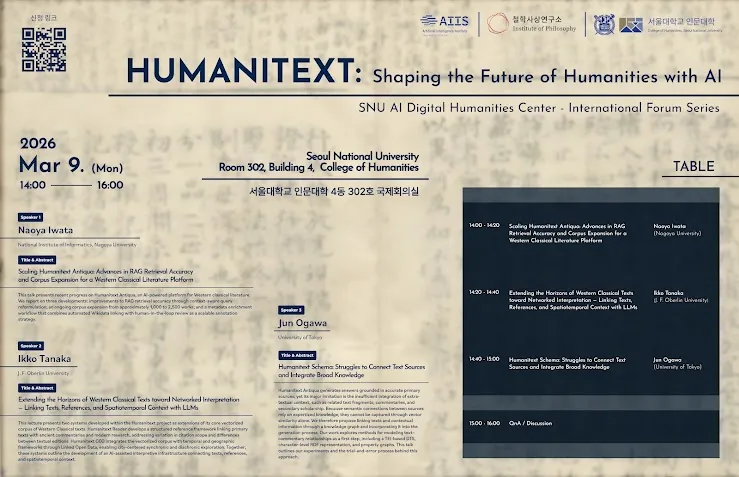
On March 9, 2026, the Center for AI & Digital Humanities and the Institute of Philosophical Studies at Seoul National University (SNU) hosted a special lecture titled “Humanitext: Shaping the Future of Humanities with AI.”
The event brought together three leading researchers from the Humanitext project to discuss the integration of Large Language Models (LLMs) and semantic web technologies into the study of Western classical literature.
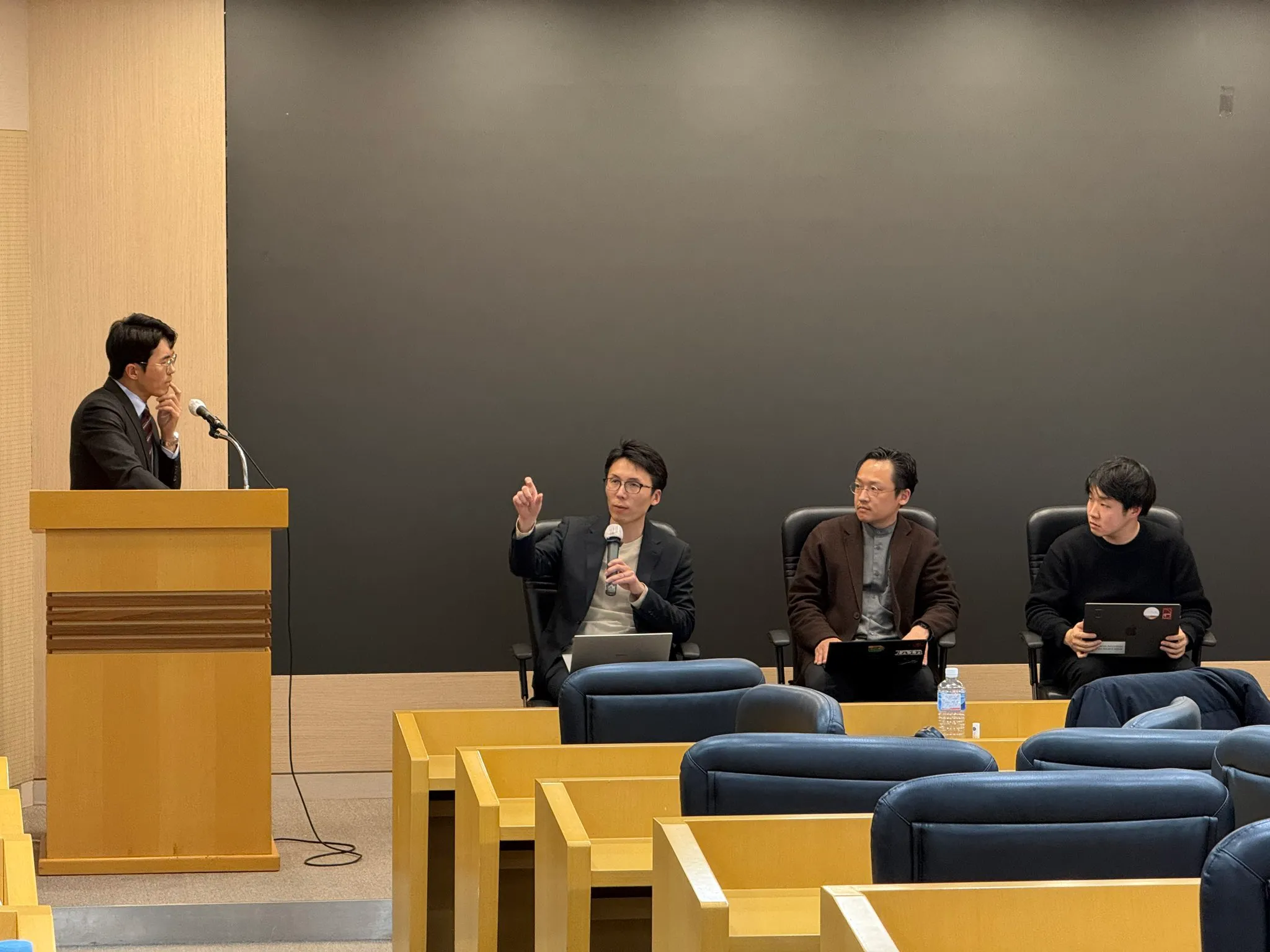 A vibrant discussion session following the presentations at Seoul National University.
Presentation Highlights
1. Advancing Humanitext Antiqua: Accuracy and Expansion
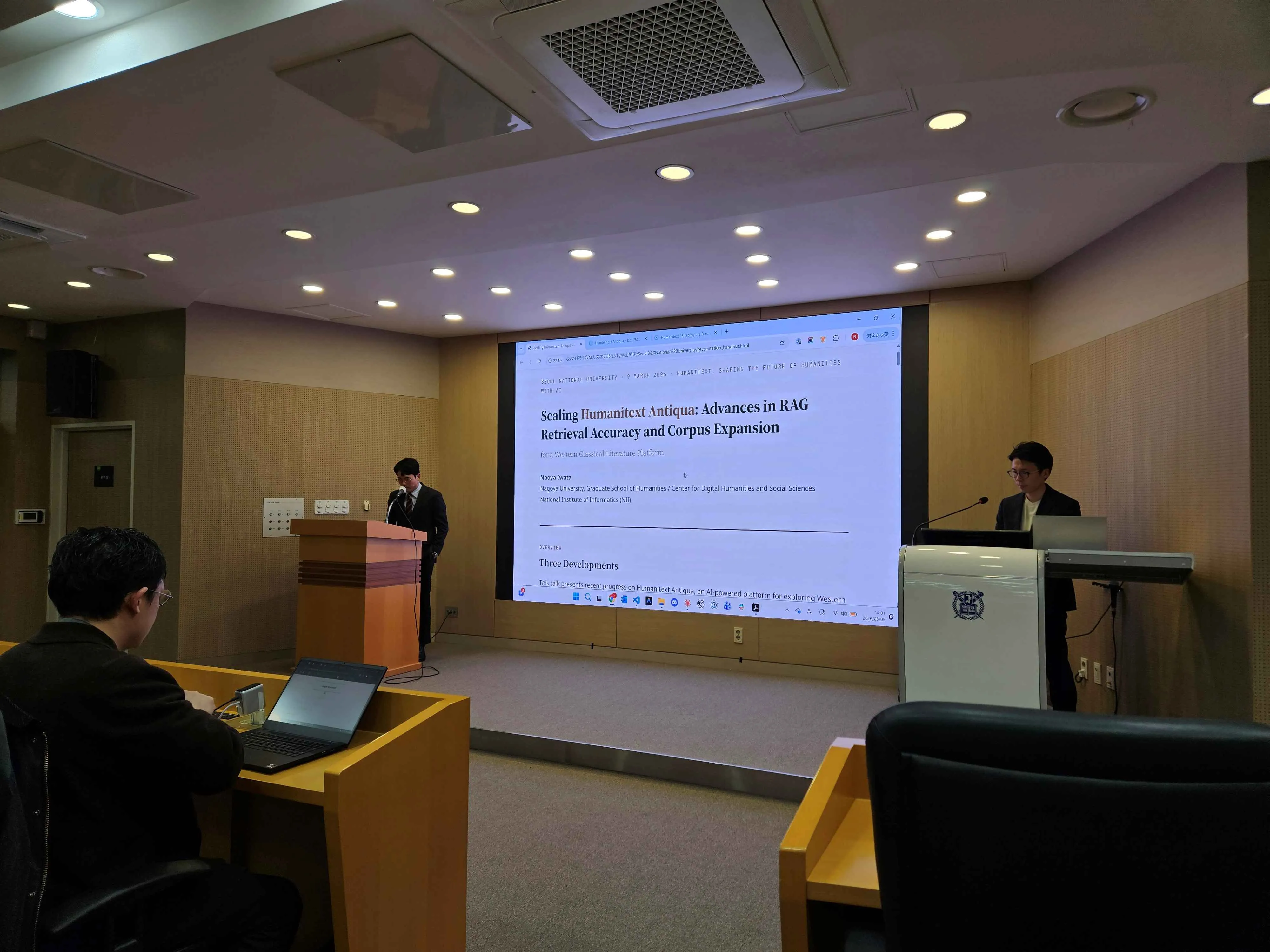
Naoya Iwata (Nagoya University / NII) Dr. Iwata presented the recent progress of “Humanitext Antiqua,” an AI-powered platform for Western classical literature. He highlighted improvements in RAG retrieval accuracy through context-aware query reformulation and detailed the ongoing expansion of the corpus from 1,000 to 2,500 works. He also introduced a scalable annotation strategy combining automated Wikidata linking with human-in-the-loop review.
2. Networked Interpretation: Linking Texts and Spatiotemporal Context
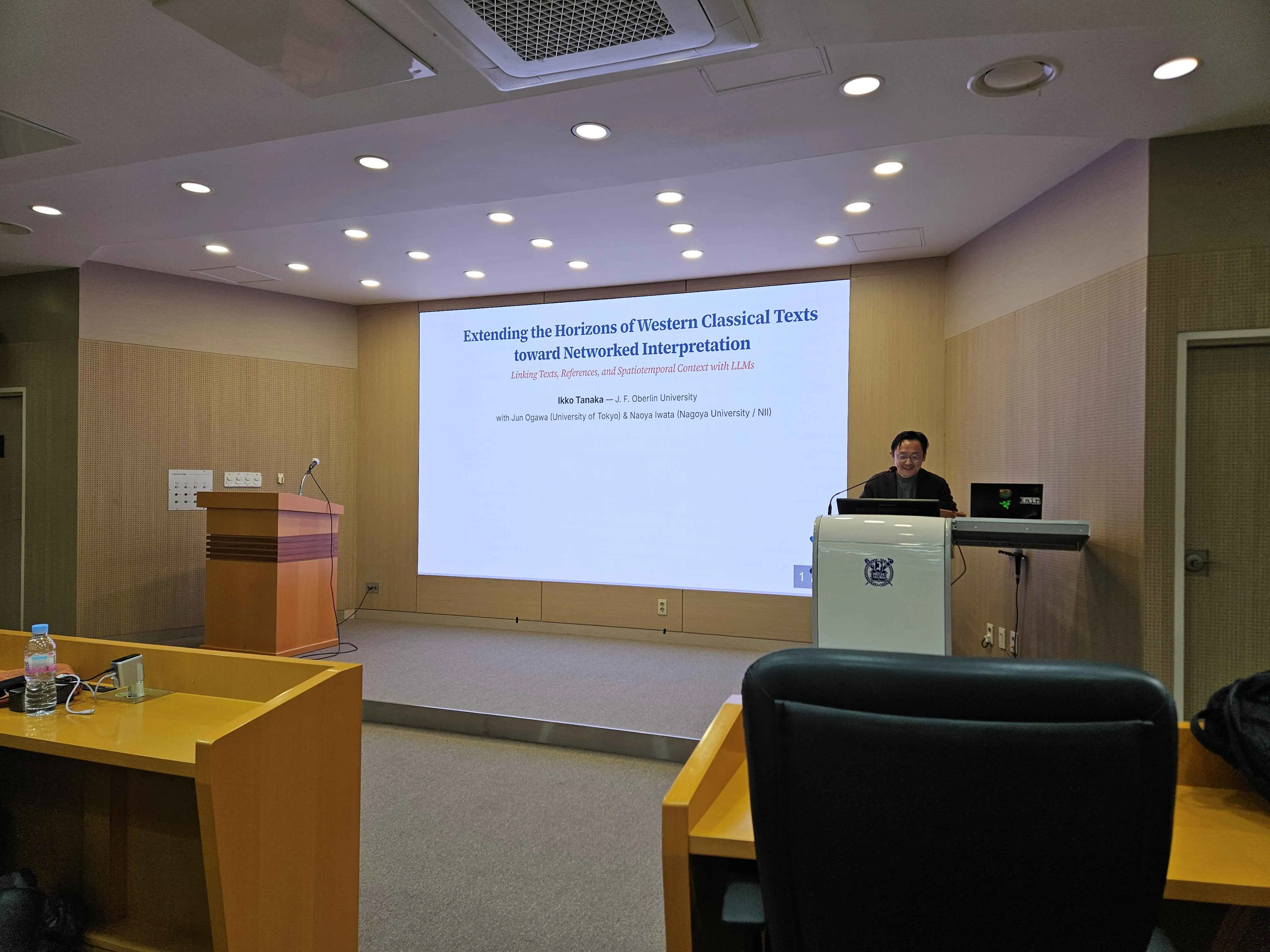
Ikko Tanaka (J. F. Oberlin University) Dr. Tanaka introduced two systems extending the core vectorized corpus. “Humanitext Reader” links primary texts with ancient commentaries and modern research through a structured reference framework. “Humanitext GEO” integrates the corpus with temporal and geographic frameworks using Linked Open Data, allowing for a multi-dimensional exploration of classical texts across history and geography.
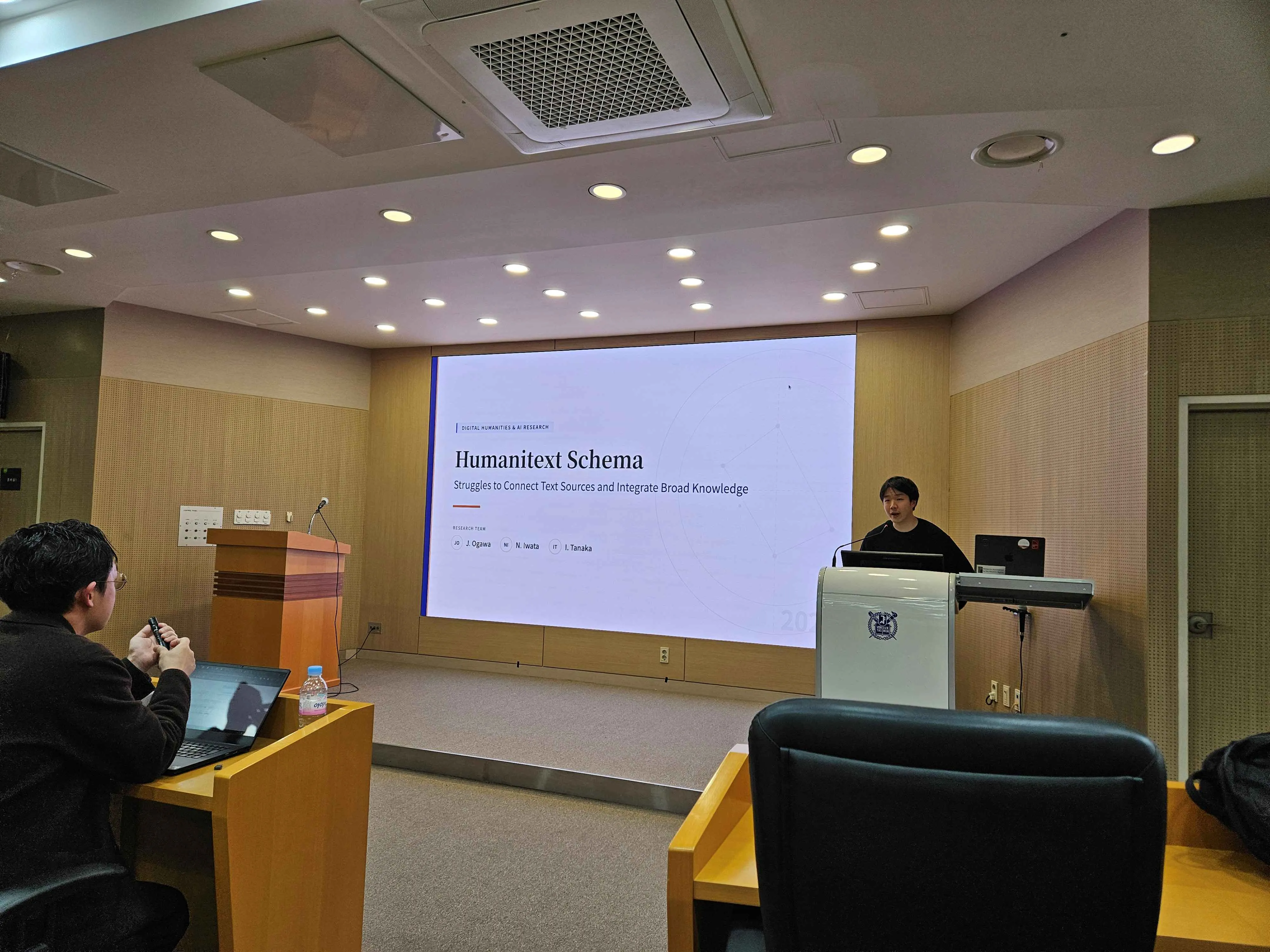
3. Humanitext Schema: Connecting Sources and Integrating Knowledge
Jun Ogawa (University of Tokyo) Mr. Ogawa discussed the challenges of modeling complex relationships between text sources. Recognizing that semantic connections often require expert knowledge beyond simple vector similarity, he proposed a knowledge graph-based approach. His talk outlined experiments with TEI-based DTS and character-level RDF representations to better capture the intricate links between texts and their scholarly commentaries.
Toward a New Interpretive Infrastructure
The session, moderated by Professor Sangyop Lee of SNU’s Department of Philosophy, concluded with a dynamic Q&A session. The discussion emphasized how AI can serve as a supportive infrastructure for humanistic inquiry, enabling researchers to navigate vast amounts of information while maintaining philological rigor. This event marked a significant step in fostering academic collaboration between Japan and Korea in the field of Digital Humanities.