

Respecting Others - The Dignity of Maturity
Do you ever find your mind unsettled by the behavior of those different from you? True freedom lies in respecting each other's individuality and connecting through the invisible bond of trust. Here is the "wisdom of sages" for harmonizing coolly with society without losing sight of yourself.


「自分は天性右を向いているから、あいつが左を向いているのは怪しからんというのは不都合じゃないかと思うのです。」
“I think it is unreasonable to say that because I am naturally inclined to look right, it is outrageous for that fellow to look left.”
—— Natsume Soseki, My Individualism
【Commentary】
Are you unconsciously rejecting those who look in a different direction than you? Soseki states that if you wish for your own individuality to be respected, it is only logical to respect the individuality of others. Just as it is your nature to look right, it is their nature to look left, and one should not introduce judgments of good or bad superiority into this. True individualism is built upon a fair gaze that acknowledges the freedom of others; it is not a pretext to allow for selfish behavior.
「党派心がなくって理非がある主義なのです。」
“It is a principle that lacks partisanship but possesses a sense of right and wrong.”
—— Natsume Soseki, My Individualism
【Commentary】
Can you possess the strength to stick to reason even in solitude, rather than seeking comfort in a herd? The individualism Soseki preaches refers to an attitude that refuses to form factions and act blindly, following instead one’s individual conscience and reason. It is not an egoism that excludes others, but a noble spirit of mutually respecting independence. Not swept away by the logic of organizations or factions, the lonely yet dignified resolve to “go the way I must go” is likely what is required of a truly independent human being.
「権力とは
“Power is an instrument used to force one’s own individuality, which I mentioned earlier, onto the heads of others.”
—— Natsume Soseki, My Individualism
【Commentary】
Is your well-intentioned advice sometimes becoming a violent imposition? Soseki warns that power can become a tool to forcibly cover others’ heads with one’s own individuality. As in the example of an older brother forcing his younger brother to fish, what is a “good thing” for oneself is not necessarily so for others. The higher one’s position becomes, the more one must constantly admonish oneself regarding the possibility that one’s values may become a burden to others.
「自己を知ることはやがて他人を知ることである。」
“To know oneself is, in time, to know others.”
—— Miki Kiyoshi, Notes on Life
【Commentary】
Can one walk through the wilderness of another’s heart without a map of the labyrinth that is oneself? The author asserts that the world seen by those blind to themselves is nothing more than uniform gray. Only those who have deeply gazed into and understood the complexity and weakness within themselves can find similar irreplaceable individuality in others. Self-understanding is not about shutting oneself in a shell, but nothing less than obtaining the key to the door that opens to the world. The depth of knowing oneself should lead directly to the depth of loving others.
「社会の基礎は契約でなくて期待である。」
“The foundation of society is not contract, but expectation.”
—— Miki Kiyoshi, Notes on Life
【Commentary】
Warm bonds between people cannot be tied with cold written contracts alone. To think that society consists solely of rational contracts and alignment of interests shows a lack of human imagination. We can live with peace of mind because there is a fundamental “expectation” or trust that others will behave with goodwill. Before laws and rules, the movement of the heart to expect from one another and to try to meet those expectations is the invisible foundation supporting human relationships. Without the magic of trust, the building known as society would likely crumble brittlely away.
「愛とは創造であり、創造とは対象に於て自己を見出すことである。」
“Love is creation, and creation is the discovery of oneself in the object.”
—— Miki Kiyoshi, Notes on Life
【Commentary】
To love is perhaps not to lose oneself in the other, but to discover a new self. The author perceives love not merely as an exchange of emotions, but as an active act of “creation.” Just as an artist pours their soul into a work, through the object of our love, we encounter depths and possibilities of the self that we could never have known alone. Loving is an activity of re-tying our relationship with the world, and through that process, we connect to a wider universe beyond the solitary individual.
「みだりに人を軽蔑する者は、必ずまた人の軽蔑を免るべからず。」
“Those who recklessly despise others cannot avoid being despised by others in return.”
—— Fukuzawa Yukichi, An Encouragement of Learning
【Commentary】
If you throw a stone at a mirror, will the shards not inevitably rain down upon you? Yukichi sharply points out the mechanism by which a heart that slights others eventually isolates itself. Criticizing the reality of others’ work based solely on one’s own ideals is merely a product of arrogant imagination. He argues that if another’s work appears clumsy, one should place oneself in that position. This teaching—to be a practitioner rather than a critic—is a painful aphorism for us in the modern day as well. Comparisons lacking respect for others are, in the end, nothing but foolish acts that drive oneself into a “bitter world of solitary isolation.”
「人にして人を毛嫌いするなかれ。」
“Being human, do not harbor a prejudice against others.”
—— Fukuzawa Yukichi, An Encouragement of Learning
【Commentary】
Are you afraid to knock on unfamiliar doors, holding onto loneliness in a closed room? In human relationships, Yukichi strictly warns against “disliking without tasting.” There are diverse people in the world, but rarely are there existences that cause harm like demons or snakes. Rather, chance encounters often become a lifelong help. Therefore, he encourages us not to shrink back or hesitate, but to open our hearts and interact frankly. Whether in academics, business, or hobby gatherings, seeking broad association is the best investment for expanding life’s possibilities. The courage to jump in without rejecting others is the first step in building rich human relationships.
「この情欲あらざれば働きあるべからず、この働きあらざれば安楽の幸福あるべからず。」
“Without this passion, there can be no work; without this work, there can be no happiness of comfort.”
—— Fukuzawa Yukichi, An Encouragement of Learning
【Commentary】
Can one drive the car of life without the engine of desire? Yukichi does not deny the “passion” (desire) that humans possess, but rather views it positively as the source of activity. It is because we have the desire to eat delicious food or wear fine clothes that we work hard, and as a result, obtain happiness and comfort. However, one must not harm others by following desire unchecked. What becomes important here is the “sincere heart” that adjusts desire and reason. Using desire as the motive power while determining the direction with the brake of reason—he argues that within this balance lies the healthy activity of an independent individual and the birth of harmony in society as a whole.
「銭を制して銭に制せられず、
“I only desire to control money and not be controlled by it, and to not harm the independence of my spirit in the slightest.”
—— Fukuzawa Yukichi, An Encouragement of Learning
【Commentary】
Are you the master of your money, or have you become a slave to it? While emphasizing economic independence, Yukichi warns against the reversal of priorities where attachment to money steals spiritual freedom. Making purchases beyond one’s means out of vanity, or wearing down one’s mind fretting over protecting family assets, is a tragedy where the means has become the end. What is important is to master money strictly as a tool and to protect one’s spiritual independence to the end. Possessing a firm self that is not swayed by money, while establishing an economic foundation, is truly a rich art of living.
(Editorial Cooperation: Haruna Ishita, Momona Sassa)
Related articles

Sticking to Beliefs - An Unshakable Self
Are there nights when your heart wavers due to the evaluations of others or impatience over a lack of results? Discard the world's measuring stick and keep walking, believing only in your own conscience and the voice of your soul. We present words of "resolve" to make solitude your ally and reignite your inner fire.
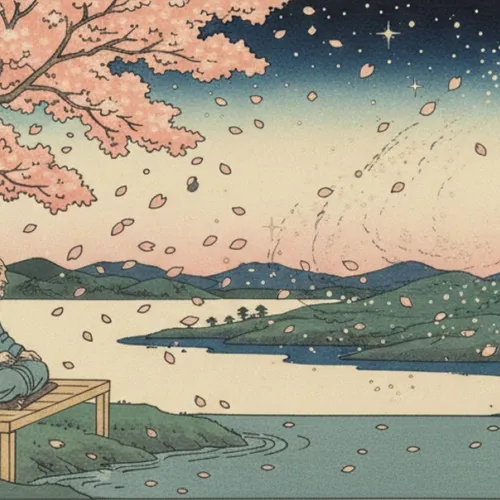
Japanese Views on Seasons - The Gaze of Literary Figures
Japanese literary figures have deeply engaged with the shifting seasons and the workings of life through various forms of expression such as novels and essays. Their delicate sensibilities and keen powers of observation open the door to a dialogue with nature for us, teaching us the beauty and philosophy hidden within everyday landscapes.

To Wonders Beyond Logic - The Beautiful Abyss Peered into by Scientists
Science is not just cold calculations. It is awe for nature beyond human understanding and an endless quest for beauty. Seeing the universe in a snowflake, feeling the ferocity of life in roadside grass... These are the adventurers of knowledge who confronted the overwhelming "mysteries" that appear only at the end of logic. We touch upon the records of their quiet yet passionate souls.
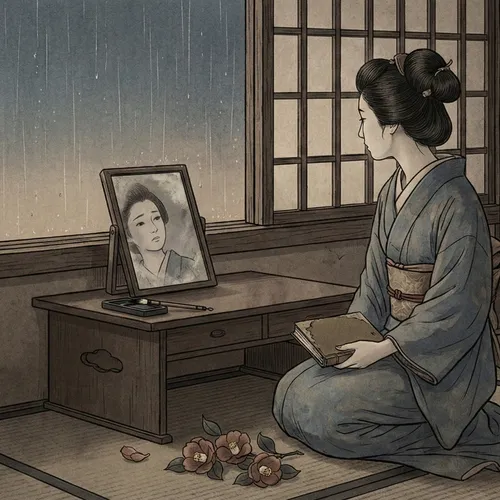
The Soul Screaming "I" - Stories of Fate and Pride by Modern Women
Should women's lives be plastered over with resignation to fate? Or is it a battle to break through social barriers and win one's own "life"? The dry self-mockery spat out by Ichiyō, the poignant scream released by Akiko for her beloved. We listen to the cries of their souls as they resisted the chains of their era, struggling through the mud to establish the "self."